Nissan Micra hatchback (2016-2022) review
"The Micra has made a welcome return to form, shedding its dowdy image to become a fun, stylish and desirable supermini"

Pros
- Racy exterior design
- Stylish interior
- Easy to drive
Cons
- Bumpy ride
- Not particularly economical
- Limited engine choices
A decade ago, it was likely that the Micra was Nissan’s best-known model. Now, it’d probably be the Nissan Qashqai SUV, but the often-overlooked Micra is still a decent supermini. It's the car that really established the Japanese carmaker's name in the UK, all thanks to its approachable, simple nature and reputation for reliability. Its easy-going character makes it a popular choice for driving schools, too – a Micra's steering wheel is the first that many motorists ever sat behind.
The latest version, though, excels in an area in which the Micra has always been found wanting – sophistication. After years of soft, friendly design, the latest model is far more attention grabbing, which is necessary to draw buyers away from the SEAT Ibiza, Ford Fiesta and Volkswagen Polo, as well as the Peugeot 208 and Renault Clio.
One of the Micra’s major selling points used to be its low price compared to rivals. Nissan has now discontinued the entry-level Visia - few buyers even considered it anyway - but the Micra now does look more expensive. If you’re keeping a tight rein on your budget, more value-focused models like the Vauxhall Corsa, Hyundai i20, Kia Rio and Skoda Fabia will appeal. Yet, the Micra has a distinctive enough look to tempt buyers of the Peugeot 208 and Toyota Yaris.
More reviews
In-depth reviews
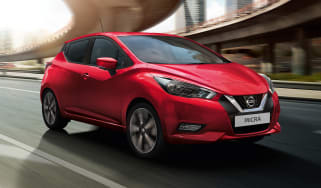
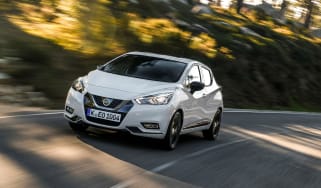
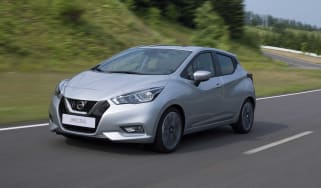
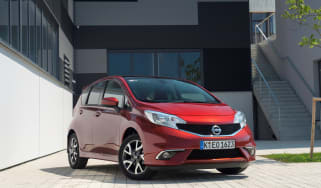
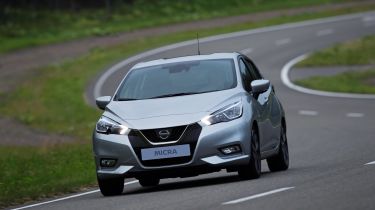
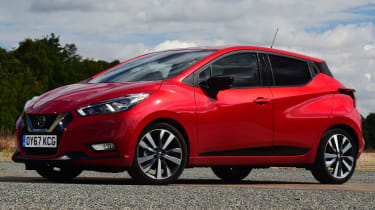
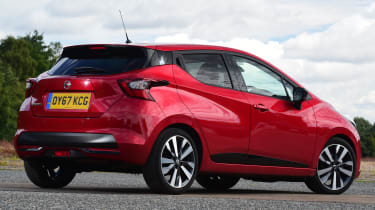
When embarking on the design of the latest Micra, Nissan started with a completely clean sheet. Out went the rather amorphous, rounded lines of previous models in favour of a sharp, energetic look, with more than a hint of sportiness. The designers have gone to town with details, too – there's a distinctive front grille and striking side-window treatment that ensures the Micra won't be lost in a car park full of other superminis. A floating roof, glass-covered rear pillars and concealed rear door handles put it 'on-trend', too – you could rarely say this about previous Micras.
The Micra's looks really come into their own if you pick a bright colour. There are a number of vibrant hues to choose from, as well as personalisation options, including body decals, to up its individuality. More than ever before, the Micra has a sense of fun, and this illusion isn't shattered when you take the wheel. In fact, it now runs the SEAT Ibiza and Ford Fiesta close for driver appeal, but it hasn't lost sight of its approachable nature, a virtue that inexperienced drivers appreciate.
If there’s one downside of its playful nature, it’s a slightly uncomfortable ride. The suspension is firm in order to keep the Micra on an even keel in corners, and this leads to occupants being jiggled and jostled on uneven roads. It’s never truly uncomfortable, but can’t come close to the unruffled calm you find inside a Volkswagen Polo. It also comes off worse against rivals, such as the Citroen C3, that have been engineered with comfort in mind.
Elsewhere, the Micra’s interior impresses. Nissan expects many buyers to be downsizing from more tech-laden cars in the class above, or even further upmarket, so there’s an impressive roster of standard equipment. This includes a bright, clear seven-inch screen, Siri voice-control via Apple CarPlay, and a powerful Bose stereo system on certain models. While top models in the Micra range look expensive, they are loaded with kit and still undercut many versions of the Ford Fiesta.
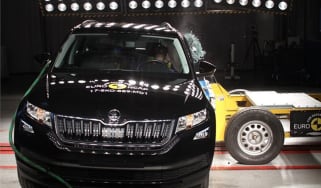
With autonomous emergency braking, lane-keeping assistance and auto-dipping headlights standard across the range, the Micra was awarded the full five stars in Euro NCAP crash testing. The Micra came an impressive 15th overall out of the top 75 models in our 2018 Driver Power satisfaction survey, with reliability rated as above average. However, in 2019 it dropped to 63rd out of 100 cars, and it didn't appear in our most recent results.
The latest Micra really is something of a breakthrough. Not only can it proudly compete with the best cars in the supermini class, but its good looks and engaging manners mean it’s genuinely desirable in its own right. It marks a creditable return to form for one of the most famous names in the business.