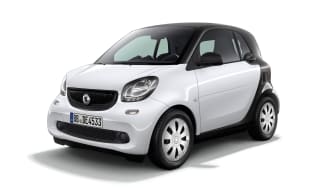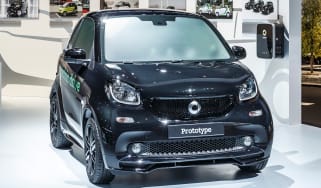
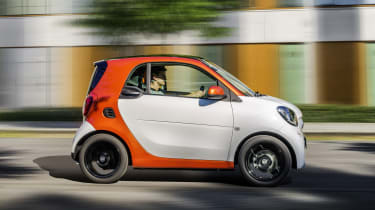
Smart ForTwo hatchback (2014-2019)
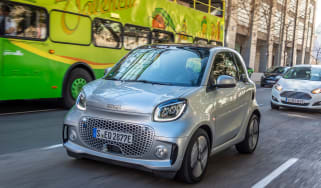
"This Smart ForTwo looks very different to the original, but it's still a very compact city car that's affordable to run and easy to park"

Pros
- Easy to park and drive
- Low running costs
- Cute styling
Cons
- Entry-level engine slow
- Unrefined at high speed
- Average crash-test rating
The Smart ForTwo doesn’t have an easy job, having to persuade owners of the innovative original to upgrade, as well as taking on larger and often cheaper rivals like the Skoda Citigo, Hyundai i10 and Fiat Panda. So does the Smart still offer enough extra to warrant its higher price tag?
Designed from a clean sheet of paper to be the best city car possible, the original Smart was the only car you could park facing the kerb without sticking out into the road, thanks to its tiny footprint. This also helped it turn as tightly as a London cab, while a small petrol engine sipped fuel. For some, this uncompromising approach also made it hard to live with.
Because of the car’s short wheelbase, stiff suspension had to be fitted to make it safe in corners, resulting in a jarring ride. On the motorway, the old Smart was prone to being buffeted by side winds and its automatic gearbox was notoriously ponderous.
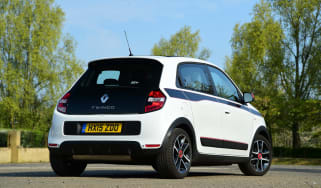
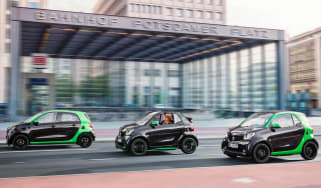
Based on underpinnings shared with the Renault Twingo, the latest Smart ForTwo is somewhat more conventional than previous versions – although it still has its engine in the back and rear-wheel drive – and feels much more composed at higher speeds. A slick six-speed dual-clutch automatic gearbox is a big improvement, too.
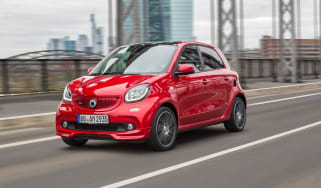
With just two seats in the ForTwo, the Smart ForFour is likely to be popular, and shares even more with the Renault Twingo, but its extra length makes it slightly less suited to really tight car parks and city streets.
Because it isn’t turbocharged, the slightly larger 1.0-litre petrol is less powerful, with 70bhp, while the smaller 0.9-litre has 89bhp in normal guise, or 108bhp when fettled by Brabus. Both engines are claimed to return economy of more than 65mpg, but it’s worth going for the turbocharged version for a better all-round driving experience, if you can afford it.
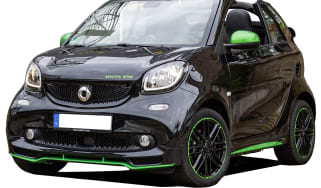
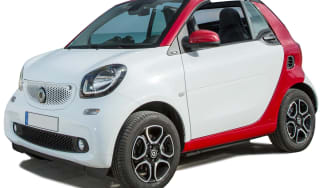
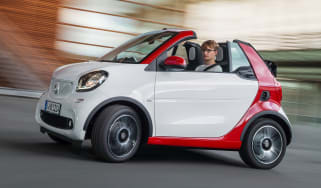
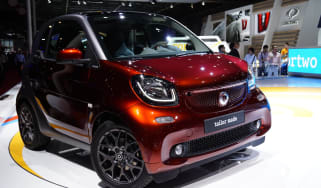
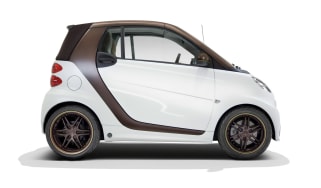
While it shares quite a bit with the Twingo, there’s no mistaking the ForTwo for anything else, thanks to its Tridion safety cell, which is painted in a contrasting colour. Not only that, there’s also a staggering number of options to adapt the ForTwo to your taste.
The least expensive ForTwo pure costs a shade under £10,000, but the most expensive Brabus sport is costlier than the most expensive Renault Twingo – with two fewer seats. As ever, though, many buyers will take advantage of Smart's competitive finance deals rather than buying outright.