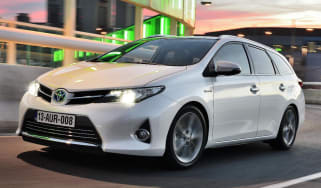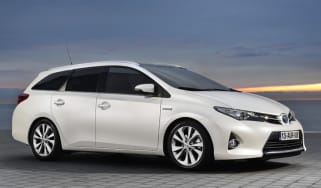
Toyota Auris hatchback (2013-2019)
“The Toyota Auris is a reliable and practical family car with low running costs, making it a sensible choice for stress-free driving”

Pros
- Extremely reliable
- Very practical
- Cheap to run
Cons
- Lacks flair
- Unexciting interior
- Automatic not very refined
The name 'Toyota Auris' doesn't trip from the tongue when discussing family cars. While the Ford Focus, Vauxhall Astra and Volkswagen Golf are household names, the Auris tends to be overlooked, but it actually has enough going for it to be worth a closer look.
Okay, it's not a car that will get your pulse racing, but it offers all many families need for practical, fuss-free transport and is sensibly priced, too. Compare it to the SEAT Leon, Mazda3, Peugeot 308 and Renault Megane and it lacks design flair inside and out. Nor is it likely to set your heart on fire on the road, but for value and reliability, it's close to the top of the class. There's even a Toyota Auris Hybrid, which we've reviewed separately, that shares much of its technology with the Toyota Prius for those in search of ultimate fuel economy.
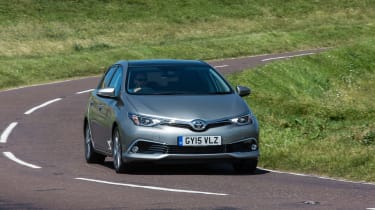
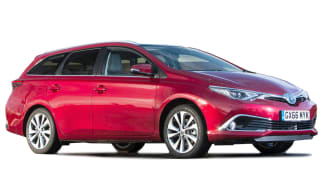
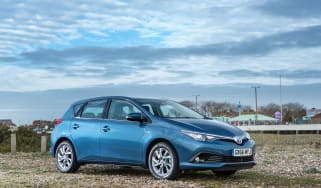
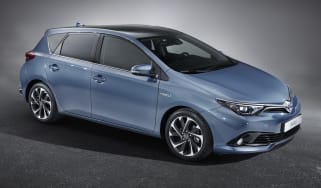
While its looks won't set it apart in the car park, the Auris is at least modern and inoffensive to the eye, with sharp lines running from the headlights to the tail, and a fairly expressive front grille. Inside, things are, if anything, a little less appealing. The dashboard lacks any real cohesive design elements, its mismatched shapes are a little dated and the materials used inside look and feel cheap.
More reviews
The control layout is sound, though, and the features are easy to use. In fact, the Auris is a very easy car to drive, and comfortable to travel in, too. Passengers will appreciate its smooth ride – the Auris makes less fuss when passing over bumps and potholes than most of its rivals. There's loads of space for four adults, with a fifth space left for a younger passenger, and the 360-litre boot is reasonable, too.
Comfort and long-distance smoothness is far more of an Auris priority than driver involvement – an energetic back-road blast will only expose the car's less-than-informative steering and tendency to lean in corners. Even the fastest model takes over 10 seconds to reach 62mph from rest, so the Auris isn't a car for those with a taste for speed. Fuel economy, though, is far more of a strong point.
There are two petrol engines to choose from, but our favourite is the 114bhp 1.2-litre. It responds urgently, yet can still return 58.9mpg. The six-speed manual gearbox is smooth and easy to use, and we found it more enjoyable than the rather noisy, slow-witted CVT automatic.
Trim levels are Active, Icon, Business Edition, Design and Excel. The aptly named Business Edition is particularly suited to company-car drivers, while the Icon is our recommendation for private buyers. Both offer a good mix of standard equipment and affordability.
The Icon is quite well equipped, with highlights like a reversing camera, DAB digital radio, Bluetooth and a seven-inch infotainment system with a touchscreen. Useful additions with the Business Edition are sat nav, cruise control and heated front seats, which are worthwhile if you plan on doing longer trips.
Customers are likely to find Toyota’s five-year/100,000-mile warranty reassuring, although they hopefully won’t need it. The Auris finished 20th out of the 75 cars ranked in our 2018 Driver Power owner satisfaction survey of cars currently on sale in the UK.
The Auris scores well for safety, with a five-star Euro NCAP crash-test result and lots of standard safety kit. Features include ISOFIX child-seat mounts on the outer rear seats, along with a system to alert you of low tyre pressures and a seatbelt reminder.
It might not have the most exciting design, but low running costs and impressive reliability are key factors for many customers shopping in the hatchback class. Here the Toyota Auris excells, and it has gained a loyal following as a result.