Toyota Urban Cruiser SUV (2009-2012)
"Easy to drive and practical, but let down by its high asking price, firm ride and noisy diesel engine choice."

Pros
- Well-built interior
- Efficient engines
- Well-built interior
Cons
- Very expensive to buy
- Dull interior design
- Firm ride around town
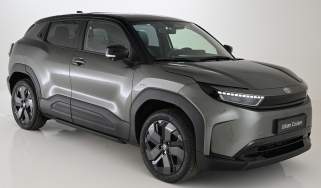
The Toyota Urban Cruiser takes its name from Toyota’s full-size Land Cruiser 4x4. But while the latter car is suited to taking on the toughest terrain on earth, the Urban Cruiser has been designed specifically for the cut and thrust of city driving. It offers unique styling and a spacious, if rather dour, interior, and is more than capable of keeping up with town traffic. Available with two- or four-wheel drive, the former isn’t cheap but the latter is even harder to recommend thanks to its extremely high price.
MPG, running costs & CO2
The engines are both pretty frugal, but you’d need to cover lots of miles before the diesel model recouped the extra investment. That’s because the four-wheel-drive system uses more fuel and the petrol car has an excellent stop-start system, meaning that the petrol car’s 51.4mpg is only just beaten by the diesel’s 57.7mpg.. Both cars cost £90 to tax as they emit 129g/km and 130g/km for the petrol and diesel respectively.
Engines, drive & performance
The Urban Cruiser is available with two engines. There’s a 1.33-litre four-cylinder petrol engine, which comes with front-wheel-drive, and a 1.4-litre diesel engine, which is only available with four-wheel-drive. Both cars come with a six-speed manual gearbox. The petrol engine is smooth and quiet, and the Urban Cruiser handles surprisingly well, with body roll kept to a minimum and steering that is light but allows you to drive with accuracy. The diesel is less impressive, as the engine is gruff and noisy. The petrol has more power, but less torque, meaning that both cars post identical 0-62mph figures.
Interior & comfort
The Urban Cruiser is well sound-proofed, with just a little wind noise upsetting the quiet of the interior when driving at motorway speeds. However, the petrol engine is quiet and smooth, while the diesel engine is noisy at all engine speeds. The ride is quite firm at low speeds, but that gives a greater feeling of control when the pace quickens. Twisty roads are best tackled with care, as the Urban Cruiser runs out of grip quicker than a Nissan Note or Honda Jazz.
Practicality & boot space
Thanks to its squared-off design, the Urban Cruiser has a decent amount of space inside for four passengers and their luggage. The rear bench folds completely flat in one easy movement and there are plenty of cupholders and cubbyholes to store small items. You sit quite high, but there is a good range of adjustment for the driver to get comfortable. When compared to a conventional supermini, it fairs well, but supermini MPVs like the Citroen C3 Picasso offer more space for less money.
Reliability & safety
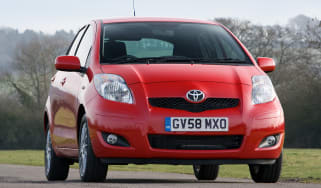
The Urban Cruiser is based on the underpinnings of the Yaris, and should share that car’s reputation for superb reliability. Toyota includes its five-year/100,000-mile warranty with all new cars to completely reassure its customers. The interior of the Urban Cruiser isn’t the most exciting to look at, but the controls are sensibly placed and everything you touch seems to be well put together. A three-star Euro NCAP performance is disappointing, however.
Price, value for money & options
Along with the single petrol and diesel engine options, the Urban Cruiser is only available in one trim level. The level of standard kit is impressive, including 16-inch alloy wheels, climate control, fog lights, Bluetooth connectivity and a six-speaker stereo, and satellite navigation is the only major item on the options list. However, for the very high purchase price asked for both models, the level of kit is the least you expect.