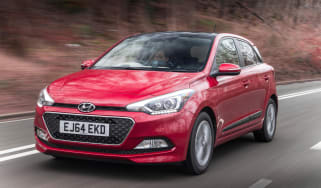
Hyundai i20 review – a fun-to-drive supermini with lots of tech
"The latest i20 is well-equipped, stylish and is worth considering for supermini buyers"

Pros
- Good to drive
- Lots of standard tech
- Impressive warranty
Cons
- Just one engine
- Some cheap interior materials
- Rivals have bigger boots
Verdict - Is the Hyundai i20 a good car?
The Hyundai i20 offers as much, if not more driver engagement than many rivals, comes well-equipped and looks good, with the benefit of innovative technology to boost efficiency. However, the i20 doesn’t lead the way in terms of comfort or practicality, and while the interior is better than before, some materials look and feel cheap. The 2023 facelift was only minimal, and while rivals such as the Vauxhall Corsa have been improved with a mid-life refresh, the i20 feels like it’s mostly familiar from before.
Hyundai i20 models, specs and alternatives
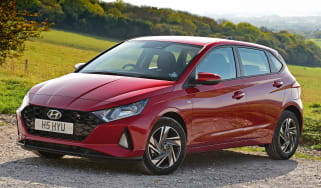
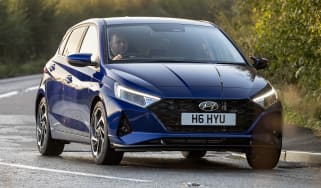
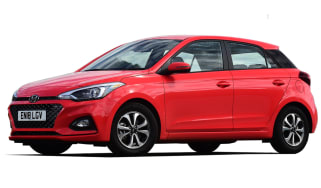
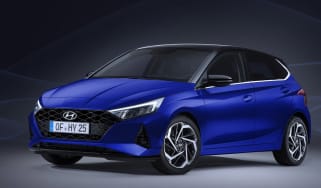
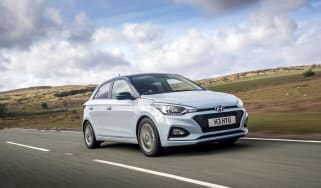
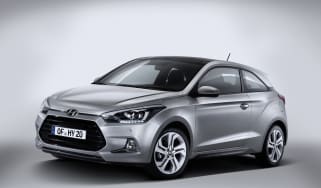
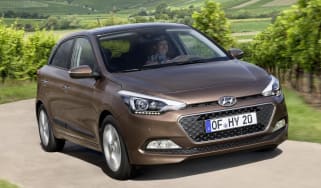
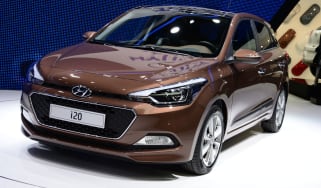
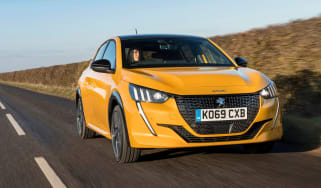
The Hyundai i20 supermini is the South Korean brand’s answer to the Vauxhall Corsa, Volkswagen Polo, Skoda Fabia and Renault Clio. The i20 is now in its third generation, but while the supermini’s predecessors were rather forgettable, Hyundai has worked hard to give the latest version more of the ‘X factor’, such as fun driving feel, more striking styling and more equipment.
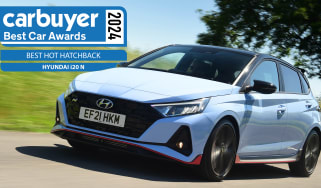
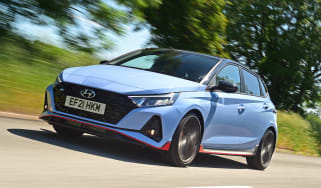
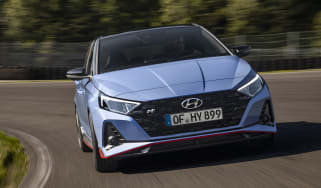
When this version Hyundai i20 was first introduced, it looked clear designers had set their sights squarely on the Ford Fiesta, because like that car Hyundai engineered the i20 to be fun to drive. This was the case even for the standard i20, but for a while the brand also sold the i20 N flagship hot hatch as a direct rival to the Ford Fiesta ST.
 The best small cars and superminis in 2025
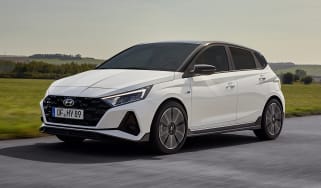
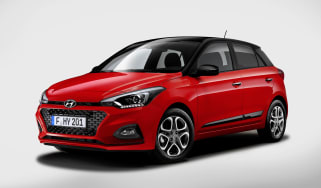
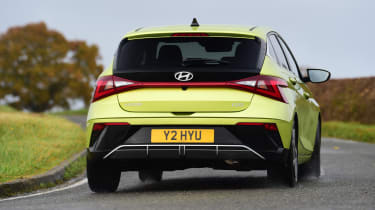
The Ford Fiesta has since been discontinued, but the Hyundai i20 has soldiered on and even underwent a facelift in 2023, though the i20 N hot hatch is no more. The i20’s facelift was minimal – the Hyundai logo was relocated from the grille to the bonnet, while the front and rear bumpers got a sportier design than before.
More reviews
Before the update, the i20’s engine range consisted of just one size in two power outputs, both with mild-hybrid assistance: a 1.0-litre petrol three-cylinder unit with 99bhp or 118bhp. The latter was discontinued as part of the refresh in favour of the 99bhp version, which comes with a six-speed manual or seven-speed automatic transmission. The i20’s sophisticated fuel-saving systems boost efficiency, keep running costs down and bump up the car’s acceleration, so the engine still manages to be peppy, smooth and refined despite its small size.
The Hyundai i20 boasts a competitive fuel economy figure of up to 53.2mpg with 120g/km of CO2, which is also helped by an innovative system that can decouple drive from the gearbox when you come off the throttle, allowing the car to 'coast' with the engine temporarily switched off. Although that may sound jarring, the i20 has one of the smoothest setups we've tried so far, but it’s somewhat strange that the brand discontinued the mild-hybrid tech for the facelift given rivals increasingly offer more sophisticated mild-hybrid and full-hybrid setups.
The i20's interior is a bit of a mixed bag but there’s more good than bad and it’s certainly an improvement over the previous model. On the positive side, there's lots of tech and space. Hyundai equips the Advance base model with an eight-inch touchscreen to the left of the instrument binnacle - for all other models this is upgraded to a 10.25-inch screen. There's a 10.25-inch digital instrument panel on all models. Features like air-conditioning, cruise control, Android Auto and Apple CarPlay also come as standard on all cars. There are almost no options available but Premium trim adds LED lights, folding mirrors, auto wipers, heated front seats and even a heated steering wheel, along with 17-inch alloy wheels – this is the model we’d recommend for most buyers.
What's slightly disappointing is some of the interior materials, because while the swooshes across the dashboard look distinctive, there's a lot of hard and scratchy plastic lower down in the car – which is made all too obvious on versions with grey trim. You’ll feel where costs have been cut every time you use the handbrake, too. There's more chrome or gloss-black trim in the Fiesta and Clio, bringing a classier feel, and even cheaper plastics tend to be patterned to make them look more attractive.
There are no worries about passenger space in the i20, with enough room in the back for two six-foot adults, which is about as much as you can ask for in a supermini. The boot isn’t so great, with the battery for the mild-hybrid system stashed under the boot floor, which drastically cuts into space. Now that the mild-hybrid technology features on every i20, there are just 262 litres to fill; much less than a Skoda Fabia or Renault Clio.
Hyundai has also fitted the i20 with plenty of safety kit, clearly wanting to better the four-star Euro NCAP safety result of the outgoing i20. Its 'SafetySense' suite of technology includes active safety kit like autonomous emergency braking to help mitigate collisions.