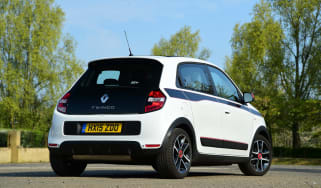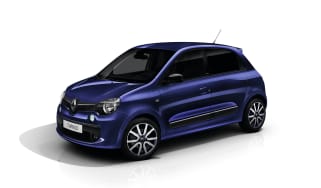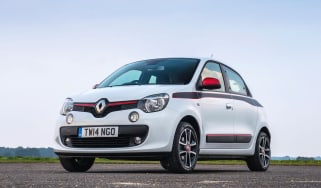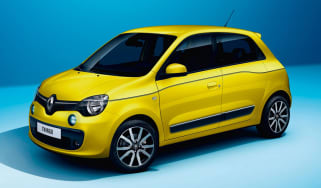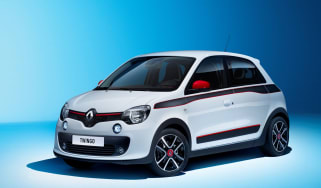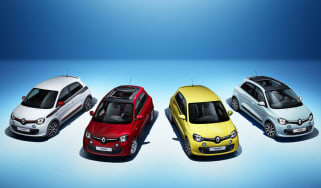
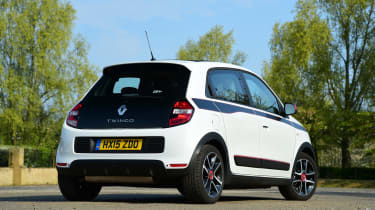
Renault Twingo hatchback (2014-2019)
"The Renault Twingo is a small and economical city car that blends good looks with decent practicality"

Pros
- Good interior space
- Small turning circle
- Stylish design
Cons
- Quite expensive
- Not the best to drive
- Lacks motorway manners
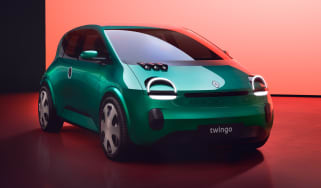
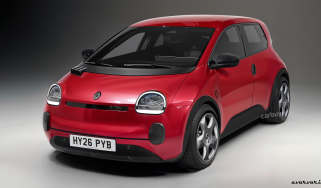
The Renault Twingo name has always been associated with fiercely individual city cars, and the latest version is no exception. It's a rival to the far more conventional Citroen C1, Skoda Citigo, Kia Picanto, Hyundai i10 and Volkswagen up!, and is notably unique in being rear-engined, with rear-wheel drive. This might seem an odd decision, but there’s method in Renault’s madness.
With its engine under the floor in the boot, the Twingo has buckets of front-end space for passengers and luggage. The absence of an engine under the bonnet also makes for a London Taxi-rivalling turning circle; the front wheels can achieve impressive angles of attack at parking speeds.
Best city cars you can buy today
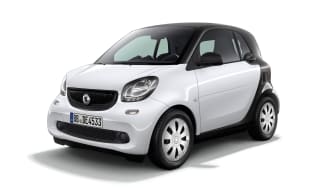
The Twingo isn’t the only rear-engined city car on the market, however – the Smart FourTwo and Smart ForFour were both developed alongside the Twingo and so all share similar technology and engines. The Renault is cheaper to buy, however.
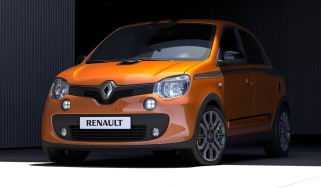
There are three engines in the Twingo range. The basic SCe 70 1.0-litre petrol option produces 69bhp, but it’s worth stepping up to the TCe 90 if you plan to do anything other than urban miles, as it produces 89bhp and feels altogether more sprightly. The most powerful engine is reserved for the sporty GT range-topper and produces 108bhp.
Inside, the Twingo is as funky as you’d hope, with plenty of fun design touches, but rivals like the the Volkswagen up! and Hyundai i10 have interiors that feel sturdier. The Twingo has practicality in spades and despite its diminutive size, there’s space for four and decent-sized boot. Unlike the similarly rear-engined Porsche 911, however, there’s no extra storage in the front of the car; the ‘bonnet’ merely slides forward to reveal access to top-up points for anti-freeze, brake fluid and washer fluid.
More reviews
You can have a Twingo in four main trims: Expression, Play, Dynamique, and GT. Expression lacks air-conditioning but comes with Bluetooth connectivity and LED running lights; Play adds air-con, a height-adjustable driver’s seat and extra personalisation options.
Dynamique offers you alloy wheels and the nicer TCe 90 engine, while the most opulent Twingo is the Dynamique S, which adds bigger alloys and part-leather seats. The final choice is the Twingo GT, which uses a more powerful 0.9-litre TCe 110 engine, developing 109bhp. This enables a 0-62mph time of 9.6 seconds without ruining efficiency.
On the road, the Twingo is competent and reasonably engaging but it won’t provide enthusiastic drivers with many thrills. The tight turning circle makes manoeuvring a breeze, but the high driving position and the rather strange steering feel discourage you from driving it particularly quickly. While the GT is a marked improvement, it’s still far from becoming a focused drivers’ car and is best seen as a comfortable yet nippy runabout.
One area of slight concern is the fact Renault came 22nd out of 27 manufacturers in our 2017 Driver Power owner satisfaction survey, with 10.8% of customers reporting a fault within the first year of ownership.
Safety is reasonable thanks to a four-star rating from Euro NCAP. While some rivals scored the full five stars, the Twingo was tested under the latest and strictest criteria and offers decent adult and child occupant protection.
Whichever Twingo you choose, it won’t cost a fortune to run. All Twingos cost £140 a year to tax, while CO2-weighted first year payments will range from £120-150 depending on your engine choice – and these are usually part of the ‘on-the-road’ price.
For driving fun, the Twingo can’t match the Volkswagen up!, especially the TSI model, which nearly matches the Twingo GT for performance. Nor can it hold a candle to the seven-year warranty of the Kia Picanto. But it’s certainly an interesting car, with a spacious interior and bags of personality.