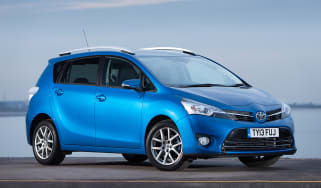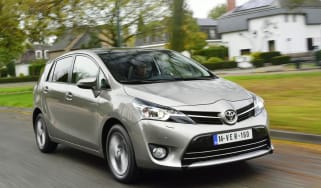
Toyota Verso MPV (2013-2018)
"The Toyota Verso MPV is spacious and should provide trustworthy and affordable motoring over the years. It might not be hugely desirable, but it’s very well thought-out"

Pros
- Practical
- Easy to drive
- Good diesel economy
Cons
- Quite pricey
- Interior lacks class
- Cramped third row seats
You can count on Toyota to make a practical and reliable family car, and although it may not be the most exciting MPV on sale today, the Toyota Verso certainly delivers. It’s a good choice that’s well built, decent to drive and very practical, offering a viable alternative to rivals like the Ford S-MAX, Renault Grand Scenic and Volkswagen Sharan. It’s not the most stylish seven-seater available, but it’s very well designed nonetheless.
This is a large MPV and as such it’s not terribly exciting to drive, but it’s perfectly civilised. Rather than being a sharper, more engaging machine like the Ford S-MAX, the Verso offers a relaxed experience with light controls and comfortable suspension.
Best 7-seat cars you can buy today
There are three engines in the Verso range: 1.6 and 1.8-litre petrols, plus a 1.6-litre diesel. The diesel is the obvious choice, with 62.8mpg fuel economy and CO2 emissions of 119g/km – just don’t expect explosive performance, as 0-62mph takes 12.7 seconds. The petrol models manage around 40mpg, emit between 150 and 157g/km of CO2 (depending on gearbox type and wheel size), with marginally better performance – the automatic version manages 0-62mph in 11.1 seconds.
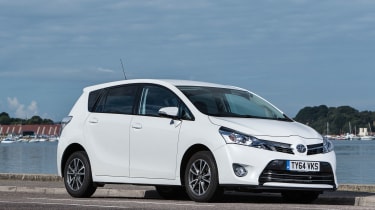
Toyota sells the Verso in three trim levels – Active, Icon and Design. Active models come well equipped with manual air-conditioning, automatic headlights and power-adjustable heated mirrors as standard, but we recommend stepping up to Icon – something you’ll need to do if you want seven seats.
It brings 16-inch alloy wheels, folding door mirrors, Toyota’s Touch2 infotainment touchscreen, Bluetooth connectivity, DAB radio and a reversing camera, plus plane-style tables for the middle row. Choose the Design model and features like sat nav, privacy glass, 17-inch alloys and a panoramic sunroof are added.
Tough materials give the Verso’s interior a resilient feel, but it’s starting to show its age, especially compared to the quirky design of the Citroen Grand C4 Picasso. There’s plenty of space in the front five seats, but the third row is only suitable for children.
Toyota has a good reputation for reliability, but still couldn't muster better than a 12th-place finish (out of 25 brands) in our 2018 Driver Power owner satisfaction survey. A five-star Euro NCAP crash safety rating should be reassuring to buyers, though.