Honda Jazz review – an easy-to-drive hybrid supermini
"The quirky Honda Jazz is even smoother and cheaper to run with a hybrid powertrain"

Pros
- Low running costs
- Smooth and easy drive
- Improved infotainment
Cons
- Unsettled ride on bigger wheels
- Only average boot space
- Hybrid tech increases price
Verdict: is the Honda Jazz a good car?
While most superminis prioritise a sporty driving experience and/or the latest tech for a low price, the Honda Jazz takes a different approach. Its smooth hybrid powertrain focuses on reducing everyday running costs; while its laid-back approach may not suit all buyers, the Jazz is a great choice if you're looking for an easy way to get from A to B as efficiently as possible. However, the Jazz’s high price means buyers might be swayed towards cheaper alternatives like the Toyota Yaris or Renault Clio E-Tech.
Honda Jazz models, specs and alternatives
The Honda Jazz has long occupied its own niche, being a small hatchback with an impressive amount of space and flexibility inside, blurring the lines between supermini and MPV with its upright design. The latest model sticks to that idea, yet also has a clever self-charging hybrid powertrain which means running costs are low and reliability is high.
That said, the latest Jazz is quite expensive – starting from just under £27,000, it’s quite a lot dearer than the Renault Clio E-Tech or Toyota Yaris, which both also benefit from frugal hybrid systems and can be had from around £21,500 or £22,500 respectively, as well as on highly competitive finance and leasing deals.
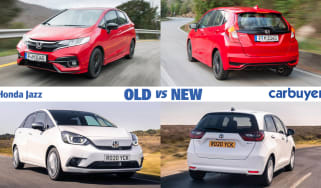
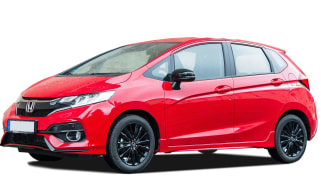
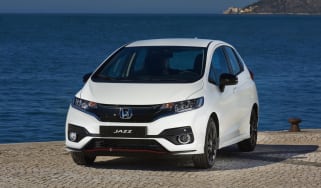
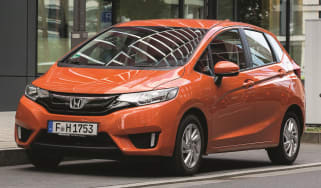
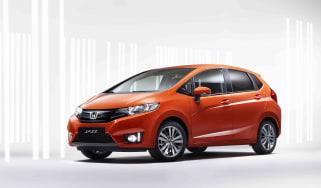
The new Jazz looks quite a bit different from before, thanks to a cutesy redesigned face that includes distinctive LED lights and chunky bumpers. There’s also a new Crosstar EX trim that looks more SUV-like in order to compete with the Ford Fiesta Active and Citroen C3. An update for 2023 included new alloy wheel designs as well as revised bumpers for all models.
 The best small cars and superminis in 2025
Stepping inside, the Jazz has a pleasant, if unremarkable, interior that features a two-spoke steering wheel and neat-looking digital instruments. Highlights of the interior include Honda’s nifty Magic Seats in the rear, which can flip up to enable you to carry larger items that can’t fit in the boot, and the space is also ideal for your tail-wagging companion, without dirtying the seat fabrics. Another item worthy of note is the Jazz’ nine-inch infotainment system; this is leagues ahead of Honda’s older setup, though it only comes fitted to mid-spec models and above.
More reviews
Speaking of trim levels, the Honda Jazz lineup expanded in 2023, so there are now four specifications to choose from: Elegance, Advance, Advance Sport and Crosstar Advance. Advance Sport gets a slightly racier look with a spoiler and more stylish 15-inch alloys, a model-specific three-spoke steering wheel, and a half synthetic leather and cloth upholstery. Crosstar Advance takes the Jazz in the other direction, with raised ride height and SUV-inspired styling, including roof bars and black side cladding for a more rugged look.
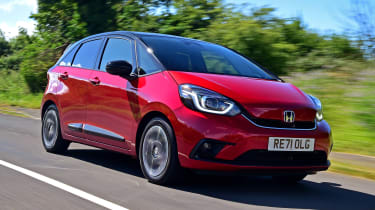
The hybrid set-up in the Jazz is referred to as ‘e:HEV’ and uses a 1.5-litre petrol engine and two electric motors connected to a battery pack. There isn’t a conventional gearbox, but in practice the sensation of accelerating feels similar to the CVT transmission in the Toyota Yaris Hybrid, with a droning noise from the engine if you put your foot down.
It’s more akin to driving an electric car at low to medium speeds, making for relaxed progress. The Jazz is very efficient; the official test shows it’s capable of up to 62.8mpg and just 102g/km of CO2 emissions. Unlike some official figures, we found that this number wasn’t difficult to match in real-world driving.
A five-star Euro NCAP rating in 2020 proves the Honda Jazz is among the safest superminis too, thanks in part to a suite of clever technology. Partner this with Honda’s impressive record for customer satisfaction and reliability in our Driver Power customer satisfaction surveys, and the Japanese brand’s smallest model looks to already be on to a winner.
Which Is Best?
Cheapest
- Name1.5 i-MMD Hybrid Elegance 5dr eCVT
- Gearbox typeAuto
- RRP£28,255
Most Economical
- Name1.5 i-MMD Hybrid Advance 5dr eCVT
- Gearbox typeAuto
- RRP£29,495
Fastest
- Name1.5 i-MMD Hybrid Elegance 5dr eCVT
- Gearbox typeAuto
- RRP£28,255