Subaru XV SUV review
"The Subaru XV is a practical family car with standard four-wheel drive, but ultimately it's a niche choice"

Pros
- Standard four-wheel drive
- Robust build quality
- Good to drive
Cons
- Small boot
- Some cheap trim
- Limited engine choice
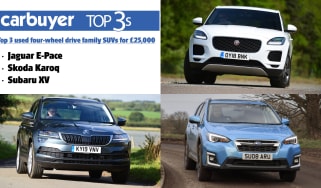
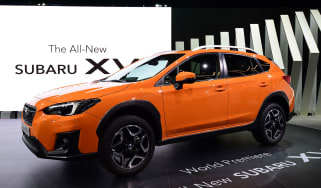
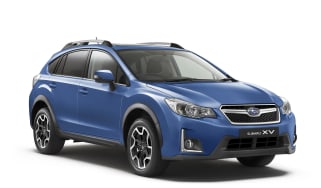
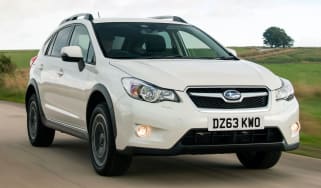
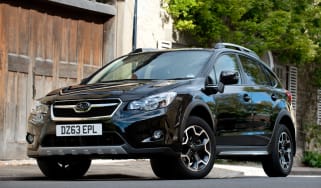
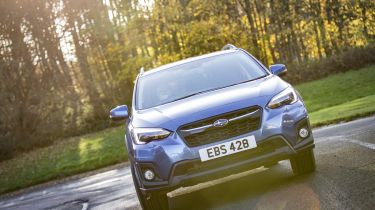
The Subaru XV is regarded as an SUV, if only because there's no more obvious category to place it in. It actually looks more like a pumped-up hatchback, with a similar style to the smaller Ford Focus Active and Kia XCeed, but a taller roof and raised ride height. It looks sportier and less bulky than more conventional SUVs, and this gives it a unique appeal compared with its Hyundai Tucson, Kia Sportage, Nissan Qashqai and Skoda Karoq rivals. With Subaru's off-road pedigree and excellent safety record, it's in with a chance of drawing buyers away from the premium Audi Q3, BMW X2 and Mercedes GLA as well.
Unlike many jacked-up crossovers, the XV is built to handle rough terrain. Its X-Mode driving mode and four-wheel-drive system allow you to tackle short, sharp inclines, slippery surfaces and rutted tracks. Hill-descent control is fitted to enable steady descents on gravel and sand, while the XV can lean at up to 30 degrees.
The Subaru XV is now into its second generation, and while the latest car looks very similar to its predecessor, the two actually have very little in common. The gains in practicality have been wiped out by the mild-hybrid e-Boxer system, with the 340-litre boot being small compared to most of its rivals.
More reviews
In-depth reviews
The latest XV is definitely more modern and attractive inside, though, with tactile soft-touch materials lifting the interior ambience. Everything feels well assembled and the layout is generally logical – although the controls of some rivals are more intuitive to operate. The eight-inch infotainment touchscreen displays graphics that are clear and simple to understand, while Apple CarPlay and Android Auto are included.
Automatic LED headlights, heated power-folding mirrors and heated front seats are standard on all models, while adaptive cruise control, autonomous emergency braking and lane-keeping assistance are all enabled by Subaru's clever EyeSight cameras mounted below the rear-view mirror.
A mild-hybrid e-Boxer model was added to the XV range in 2019. It uses a 148bhp 2.0-litre petrol engine in combination with an electric motor that’s powered by a small battery located under the boot floor, allowing for pure-electric driving at speeds of up to 25mph. Official fuel economy figures don’t improve massively, with a claimed WLTP figure of 35.7mpg. All engines feature a continuously variable transmission (CVT) as standard.
There's no diesel engine option for the XV – the mild-hybrid replaces a 2.0-litre petrol with 154bhp, and an underpowered 112bhp 1.6-litre petrol was also available until recently. Neither is especially economical, though – that’s a consequence of its four-wheel-drive system.
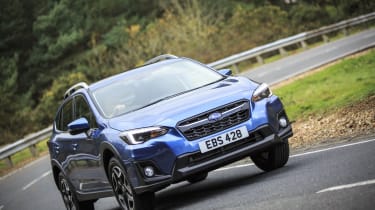
An upright stance ensures the XV is roomy for passengers, but the boot is on the small side. Despite this, a practical shape makes it possible to make good use of the luggage space, so most families shouldn’t have any issues.
Subaru finished strongly in our 2019 Driver Power survey, with the brand finishing in sixth place for owner satisfaction and the XV sitting at 50th place in our best cars to own list. This should provide reassurance, as will the car's five-star Euro NCAP crash-test rating, which came after the XV set a top result in Japanese testing.
The Subaru XV may not be an obvious family SUV choice, but makes a genuinely interesting alternative to the usual suspects. If your active lifestyle makes real off-road ability desirable, it could be worth considering. Those for whom SUVs appeal on style alone, though, will find better value for money elsewhere.