Hyundai i30 review – A worthy family hatchback
"The Hyundai i30 is comfortable enough for long motorway drives and loaded with safety kit, making it easy to overlook its weaker points"

Pros
- Excellent standard safety equipment
- Fantastic motorway cruiser
- Economical engine range
Cons
- Badge lacks desirability
- Steering too sensitive
- Rear headroom not the best
Verdict - Is the Hyundai i30 a good car?
Glance at a list of the best-selling models in the UK and you’ll notice that most are hatchbacks, and that several of those are Hyundai i30-sized cars aimed squarely at families. The Volkswagen Golf makes regular appearances in the top ten, but the i30 doesn’t yet sell in sufficient numbers to join it on the list. Buyers have already cottoned onto the talents of the brand’s SUVs such as the Tucson, but there’s still plenty to recommend the i30 too, such as an impressively long list of standard equipment and boot space that beats both the Golf and Ford Focus.
Hyundai i30 models, specs and alternatives
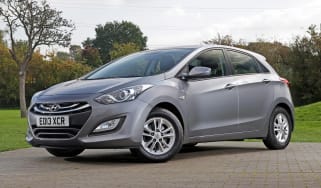
The Hyundai i30 is a family hatchback produced by the South Korean brand, and while it’s not a particularly household name, it arguably ought to be. While more well-established names such as the Ford Focus and Volkswagen Golf are the first thing that comes to mind when looking for a hatchback, the i30 aims to deliver good value for money and – for the latest generation – a little more of a quality feel than its predecessor.
 The top 10 best family cars 2025
The Hyundai i30 goes up against other family hatchback rivals such as the Toyota Corolla, Mazda3, Peugeot 308, SEAT Leon and Vauxhall Astra, while options such as the Audi A3, BMW 1 Series and Mercedes A-Class add an extra degree of premium feel if your budget can stretch a little further.
More reviews
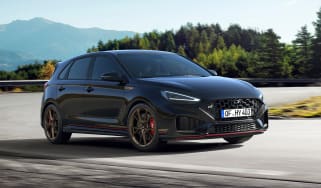
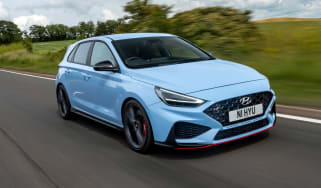
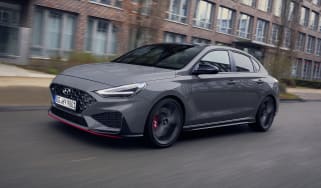
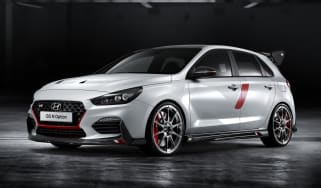
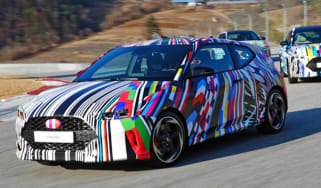
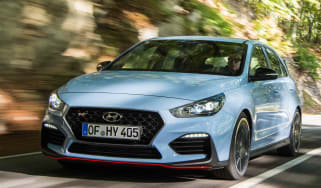
Hyundai even injected an extra dose of clout into the i30 with its hot-hatch i30 N halo model, rivalling the Ford Focus ST and Volkswagen Golf GTI – we’ve reviewed that model separately. This was fitted with a 2.0-litre turbocharged engine with 276bhp, but is currently unavailable to order on Hyundai’s website with no news on when – if ever – it will return. Still, we were impressed with it and it’s done a great job of putting the i30 on more buyers’ radars.
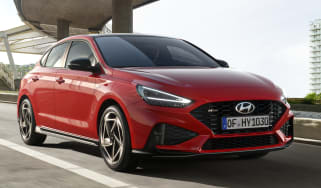
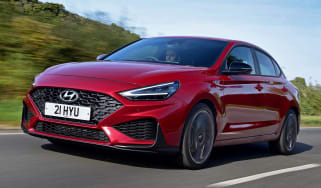
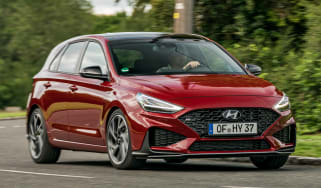
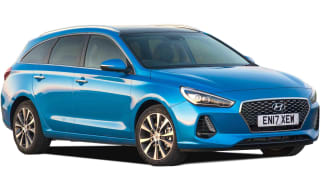
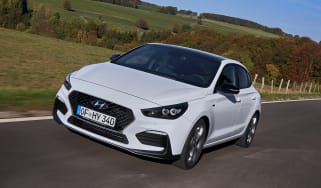
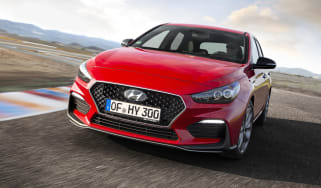
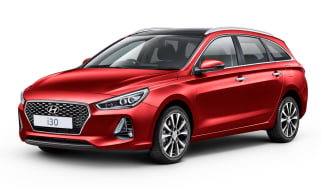
The i30 was facelifted towards the end of 2020 and changes included a wide new grille and pointy LED headlights on Premium and N Line versions. It gave the i30 a smarter look to help win over buyers looking for a stylish family hatch, and there are definitely shades of the Focus in the design of the car’s nose. The facelift has also brought updated technology and a clearer range of trim levels.
Safety is one area where the i30 excels, because Hyundai has fitted technology like autonomous emergency braking (AEB), lane-keeping assistance and even headlights that dip automatically – all as standard. This isn’t something that can be said for every rival, and is a commendable move by Hyundai.
The petrol-only engine line-up is convincing, too. The range kicks off with a 1.0-litre three-cylinder developing an eager 118bhp, while a larger 1.5-litre four-cylinder offers a punchy 157bhp. Both units are turbocharged and have enthusiastic if not class-leading performance, but with the addition of fuel-saving mild-hybrid tech, both units are economical and help reduce running costs. As part of the 2020 facelift, the 134bhp 1.6-litre diesel engine was dropped due to a lack of demand.
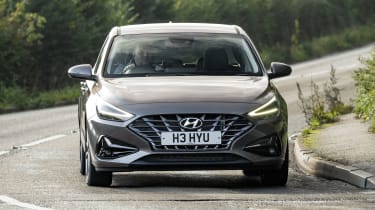
Fuel economy for the standard i30 petrol models spans from 44mpg to 54mpg. The 1.5-litre petrol offers the best performance outside of the i30 N hot hatchback, managing to dash from 0-62mph in under nine seconds, while the compact 1.0-litre still dips under 11 seconds and the hot i30 N under six seconds. All engines are now available with a seven-speed automatic gearbox, which has little effect on performance in the 1.0 and 1.5, though the optional eight-speed on the i30 N is a touch quicker than the manual.
Get behind the wheel and the i30 driving experience is both impressive and frustrating. On the motorway, it’s very refined and similarly quiet to a Golf or Astra, but the steering feels twitchy, so the i30 needs regular inputs to keep it in the middle of the lane.
Inside, the i30 is comfortable, aesthetically pleasing and feels well built: the dashboard design is conservative, sure, but it’s pleasant enough and overall material quality is good, save for one rather prominent piece of scratchy plastic. The rear seats are adequately spacious rather than impressively roomy (six-footers will find them tight) but the 395-litre boot means the i30 has a little more luggage space than the Astra, Focus, Golf and A3 – although not the Skoda Octavia.
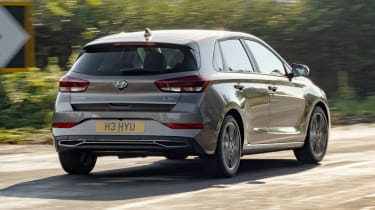
Pre-facelift i30s came in a confusing selection of seven trim levels, but Hyundai has seen sense and slimmed that down to just three more clearly-defined lines. That meant that the cheapest S spec was withdrawn but it was sparsely equipped anyway, and the new SE Connect entry-level model offers a far more generous equipment list. It has a digital radio, alloy wheels, rear parking sensors and a reversing camera, plus an eight-inch touchscreen with Apple CarPlay and Android Auto to mirror your phone’s apps on the car’s screen.
Premium adds luxurious touches, including a heated steering wheel, a larger touchscreen with sat nav, a digital instrument cluster and wireless phone charging. It’s £3,000 more than SE Connect but the difference may not be massive on a monthly basis.
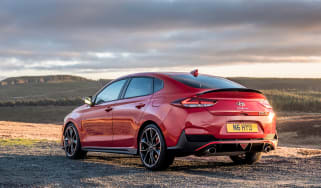
Because it has a more powerful engine, the sporty N-Line model is the most expensive, around £1,000 more than Premium trim. It carries most of the features of the Premium version and brings a sporty body kit that helps the i30 stand out. It’s intended as a less extreme alternative to the flagship performance model, the i30 N, with lower running costs and performance.