Ford Fiesta review (2017-2023)
"The economical and fun Ford Fiesta is a more complete package than ever before"

Pros
- Impressive economy
- Terrific handling
- Roomy interior
Cons
- Evolutionary style
- Some safety kit optional
- Top models are expensive
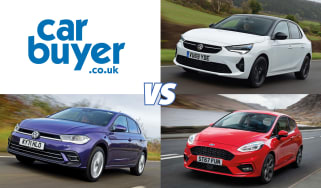
The latest Ford Fiesta doesn't look that different from the old one, which it replaced in 2017. Given there wasn’t much wrong with that car, a model that had been on sale for nine years, it’s perhaps unsurprising there weren’t more major changes. After all, Ford wouldn't want to risk sending buyers into the arms of manufacturers like Vauxhall and Volkswagen, who make rivals to the Fiesta in the form of the Corsa and Polo respectively.
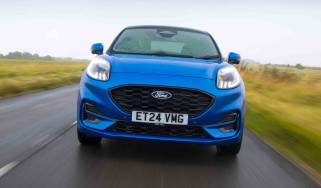
In 2021, the Vauxhall Corsa outsold the Fiesta, and the Ford Puma was the only model from the brand that finished in the top 10 best sellers list for the year. To redress the balance, Ford announced an updated model of the Fiesta, featuring slightly tweaked styling and updated technology. However, this was followed by the shock news the Ford Fiesta was being discontinued in 2023, with buyers after an affordable Ford now needing to opt for a Puma instead, or head to a rival brand.
 The best small cars and superminis in 2025
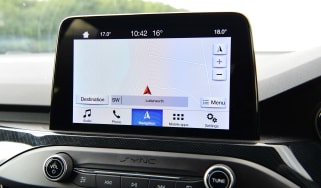
The changes were relatively minor, and we would have liked to see a hybrid or electric version introduced to keep pace with its lower-emission rivals. While the new digital instrument cluster is nice, the touchscreen ran the same SYNC 3 system as before, rather than the latest SYNC 4 system that is fitted in the facelifted Ford Focus. In recent months, this has been downgraded to SYNC 2.5 (without navigation or FordPass connectivity), and better infotainment and the digital dials have moved to the options list instead.
More reviews
Driver appeal was something the old Fiesta excelled at and with talented rivals such as the SEAT Ibiza, Renault Clio and Peugeot 208 breathing down its neck, the new one couldn't afford to drop this particular ball, either. At the same time, supermini buyers want to have their cake and eat it: a small, economical car that’s also comfortable, well-built and stuffed with technology. It helps that the latest Fiesta delivers on these fronts, too, although rivals have caught up.
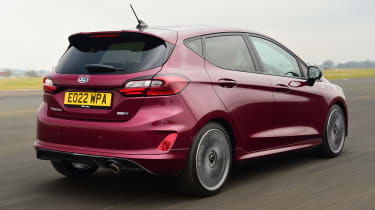
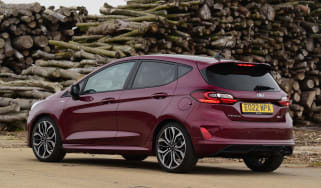
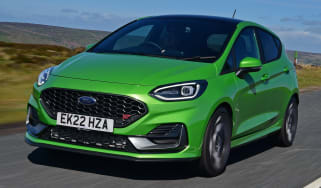
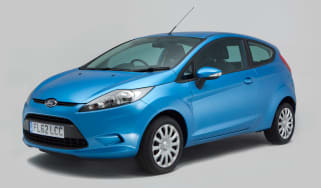
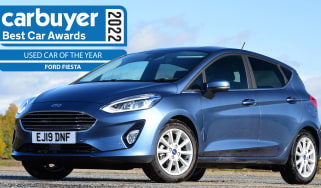
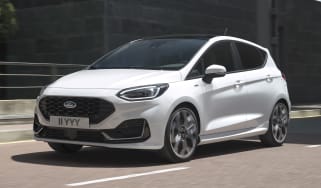
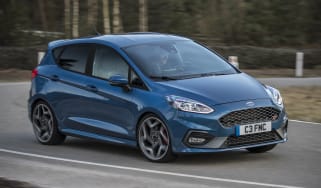
It might look similar to the model it replaces, but look harder and you’ll notice this Fiesta is actually bigger where it counts. For a start, it’s longer, allowing Ford's designers to increase passenger space in the back. At the same time, subtle styling details distinguish trim levels from one another, adding to their allure. Facelifted cars are marked out by redesigned headlights and a new grille, where the Ford badge is now placed.
The Fiesta range starts with a new Trend spec, which replaces Zetec and the sparse Style trim. The trim levels then include Titanium, ST-Line and Active models, plus even higher spec versions of each trim designated by an X after the trim name. Trend and Titanium versions have a front bumper that Ford says is intended to be friendlier and ‘more optimistic’. A smart touch is its pair of vertical fog lights. As its name suggests, the ST-Line has a sporty bias, courtesy of slightly stiffer suspension and a bodykit. It’s not expensive to run, though, and we’ve found its suspension still provides plenty of comfort, while handling better than 'warm hatchbacks' like the Suzuki Swift Sport.
The ‘X’ versions of the top three specifications add extra features like larger wheels, upgraded LED rear lights, privacy glass among other upgrades.
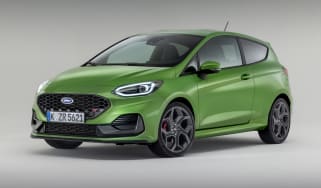
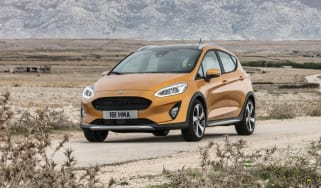
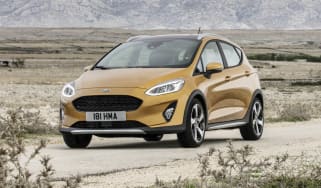
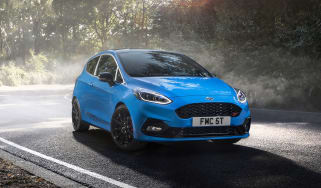
The Fiesta Active versions blend SUV elements – a raised ride height, body protection and roof rails – with low supermini running costs and easy driving manners. And performance enthusiasts will be more excited by the Fiesta ST (one of our favourite hot hatches), which we’ve reviewed separately.
While a 197bhp 1.5-litre EcoBoost three-cylinder petrol engine is fitted in the ST, the regular Fiesta line-up still offers an excellent range of petrol engines with varying power outputs and the option of mild-hybrid electrical assistance. No hybrid, plug-in hybrid or electric version is likely to be available in this generation of Fiesta, and the electrical assistance is less noticeable than Ford makes out - although it does boost fuel economy slightly. In late 2020, the diesel engine was discontinued.
You’ll get the mild-hybrid tech on the 123bhp and 153bhp versions of the turbocharged three-cylinder 1.0-litre petrol engine; the latter is good for a nine-second 0-62mph time. The same engine is available with 99bhp without any electrification, while the 123bhp engine now comes with it whether you spec the manual or automatic gearbox (it was reserved for manual cars at launch). The entry-level Fiesta Trend model now gives the option of the 99bhp 1.0-litre engine, alongside the old-fashioned, non-turbocharged 74bhp 1.1-litre engine.
No matter which engine you choose, the Fiesta is a pleasure to drive, either on a long motorway trip or a challenging country road.
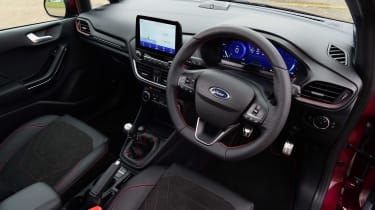
The mechanical package stacks up well and Ford has clearly taken the latest Fiesta’s inside story seriously, too, with an interior feel that comes close to matching the very best in its class. The cleanly styled dashboard is made from high-quality, tactile materials and everything feels superbly put together. The Fiesta’s connectivity and infotainment systems are now better than ever, too – gone is the rather dated mobile-phone-style button pad below the previous rather cramped infotainment display; a ‘floating’ tablet-style screen takes its place on every model. This brings Apple CarPlay and Android Auto compatibility and a classy-looking eight-inch touchscreen.
Every model features lane-departure warning and assistance, a sign of Ford’s big push on safety. It’s a shame that so much of the Fiesta’s most advanced safety equipment is optional at extra cost, though. You can add automatic emergency braking with pedestrian detection and active parking assistance that can apply the brakes if needs be, plus blind-spot monitoring, as well as traffic-sign recognition and auto-dipping headlights. The 2022 model will gain standard LED headlights and a Wrong Way Alert, plus more models will benefit from a reversing camera.
A glance at the price list shows that the most lavishly equipped models are rather expensive, but when you realise the mid-range version has all the must-have features, the Fiesta’s value-for-money looks good. And while economy, practicality and quality have all improved, the car’s fun-loving character has been kept intact. As Ford has completed the package with a five-star Euro NCAP crash-test verdict, the Fiesta is a tough supermini to beat.