Fiat 500C convertible review
“All the charm of the Fiat 500, but with the added fun of a fresh breeze in summer”

Pros
- Mild-hybrid is cheap to run
- Simple electric folding roof
- Cool retro looks
Cons
- Not a 'true' convertible
- Basic entry-level model
- Cramped back seats
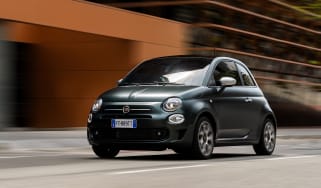
When the Fiat 500 arrived, it joined the ranks of retro throwback models like the Volkswagen Beetle and MINI hatchback, which stormed up the sales charts. But of the three, the Fiat was arguably closest to recreating the design of the original 1960s icon, with all the similarities clear to see even if you park both cars side-by-side.
The reborn 500 proved a smash hit, so Fiat started to look at expanding the range. The 500C cabriolet arrived soon after to compete with the MINI Convertible and DS 3 Cabrio, with a similar roof design to the latter.
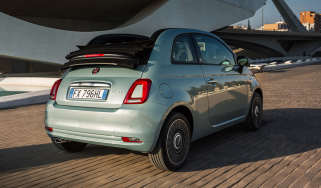
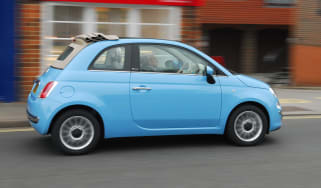
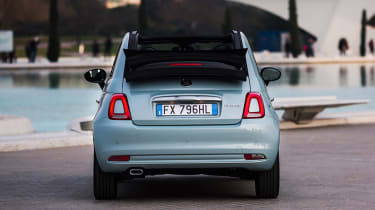
This sees the fabric roof retract while the roof pillars and side windows stay in place, providing a wind-in-the-hair driving experience without radically changing the 500’s iconic shape or compromising safety. The 500C drives almost identically to the closed-roof version, too. The controls are light – this is a city car after all – and the Fiat is easy to drive and park.
Now, the Fiat 500C is one of the only convertible city cars left on sale. Previously, you could buy fabric-topped versions of the Toyota Aygo, Peugeot 108 and Citroen C1. The slightly bigger MINI Convertible is still its main rival, as the Smart ForTwo cabriolet is now electric-only. The Toyota Aygo X is offered with a retractable roof, but its SUV-styling means it’s likely to appeal to a different buyer.
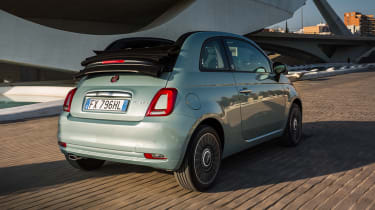
Fiat gave the 500 range an overhaul in late 2015, implementing lots of updates, but only tweaking the characterful exterior with subtle changes to the lights and bumpers. A facelifted 500 is easier to spot inside, where there’s a new infotainment system, digital gauges and different upholstery.
More reviews
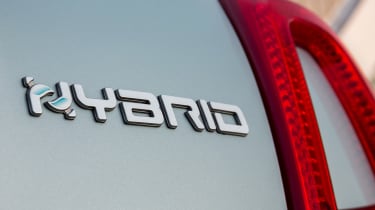
Despite being on sale since 2009, the Fiat 500C is still going strong. In February 2020, the original 1.2-litre engine was replaced by a mild-hybrid 1.0-litre engine, with a similarly small power output but with the promise of much-needed efficiency gains.
Don’t confuse it with the brand-new fully electric Fiat 500 and 500C. The Fiat 500 EV is an all-new, third-generation model, but the hybrid 500 and 500C will continue to be sold as a cheaper alternative.
The 500C has enjoyed a huge number of special-edition trim levels throughout its life, plus a few core models including Pop, Pop Star and Lounge. The current trims are Dolcevita and Dolcevita Plus (Dolcevita being the new name for the fabric roof), and a RED special edition; all are much better equipped than older 500Cs.
A seven-inch touchscreen with Apple CarPlay and Android Auto phone connectivity is now standard, as are rear parking sensors, split-folding rear seats, cruise control, air conditioning and alloy wheels. Dolcevita Plus adds a digital instrument cluster, sat nav and bigger wheels. RED versions are marked out by red and black detailing and a hand sanitiser dispenser, in response to the Covid-19 pandemic.
While the 500C hasn’t been officially crash-tested, the near-identical 500 hatchback has been subjected to Euro NCAP safety testing twice, scoring the full five stars in 2007, but only managing three stars in 2017. This shows just how much tougher the test has become, and the fact it now takes into account the latest safety technology (like autonomous emergency braking), which the Fiat 500C lacks.
MPG, running costs & CO2
Fiat’s old 1.2-litre engine has now been discontinued, after a few too many years of service. It looks economical on paper but needs a lot of revs to make progress, which increases fuel consumption.
There was also a two-cylinder 0.9-litre TwinAir petrol engine, which appeals on paper with excellent claimed economy figures. You'll struggle to reach the mpg figures though, because you have to rev the 500C TwinAir quite hard to make progress. It's also enjoyable to do this thanks to the car's thrummy sound, so you'll be visiting the petrol pumps a bit more regularly than originally expected.
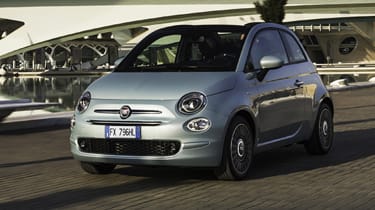
New Fiat 500Cs use a mild-hybrid 1.0-litre petrol engine, which is capable of up to 53.3mpg according to the latest testing standard. In real-world driving, that should be an improvement on the 1.2 and TwinAir engines. Company-car drivers keen on a 500C will pay a fairly low rate of tax because it has reasonable CO2 emissions.
Insurance groups range from 11 to 17, which is quite low for a convertible. Both Dolcevita models sit in group 12. In terms of maintenance, you can opt for an 'Easy Care' service package that covers all servicing costs – including parts and labour – for the car's first three years of life.
Engines, drive & performance
The Fiat 500C’s compact dimensions mean it's easy to drive around town. Steering is accurate, and every version has a button on the dash that makes the steering even lighter to help with parking.
The 1.2 and 0.9-litre TwinAir petrol engines deliver 69bhp and 85bhp respectively and are enjoyable to drive. There's a distinctive growl to the engine note, encouraging you to rev it a bit harder, which you'll need to do to make good progress.
Models with the new 1.0-litre mild-hybrid engine still aren’t very quick, but they’re slightly less strained than the old 1.2 engine. The best-driving 500C is arguably the electric one.
The 500C’s ride is firm, but not uncomfortable, while the most powerful versions with bigger wheels and tyres also offer plenty of grip in corners, although there's quite a bit of body lean. The convertible roof adds an extra dimension of fun to the driving experience, too.
Interior & comfort
The 500C’s cabin is surprisingly quiet and refined with the roof down. The fact that it's only the centre section of the roof that folds away helps to keep wind noise and buffeting low, so it's actually a rather civilised convertible - it just feels like a hatchback with an extra-large sunroof.
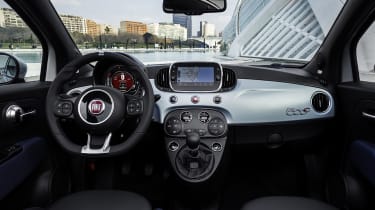
The dashboard looks great, thanks to a body-coloured piece of trim dominating the cabin, and Fiat has improved the quality of fixtures and fittings. There's also a seven-inch infotainment system now fitted as standard, adding some much-needed modern technology to the 500C. There's also a digital instrument cluster ahead of the driver on higher-spec versions.
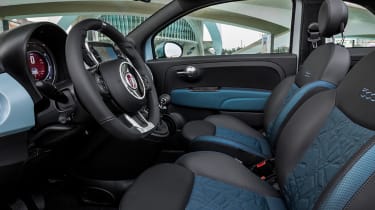
As with the hatchback, there's plenty of room for front-seat passengers, but those in the rear will find it rather cramped.
Practicality & boot space
Convertibles usually have less space inside than their hatchback equivalents, but the 500C's 185-litre boot is identical to the hatchback's. It's not as big as those in the MINI Convertible and DS 3 Cabrio, but at least this doesn't change whether you've got the roof up or down. Note that the boot opening is tiny – it’s more like a letter box.
The 500C's fabric roof folds back electronically at the touch of a button and can be operated at speeds of up to 37mph. It can also be partially opened, like a sunroof.
There's also a decent amount of storage inside the Fiat 500C, with cupholders and spaces to store odds and ends, although the door bins are quite small.
Reliability & safety
Fiat’s reliability has been less than perfect in the past, but the range of engines used in the 500 have proved very dependable. The basic model misses out on electronic stability control, though, but the 500 hatchback still received a five-star safety rating from Euro NCAP when it was tested in 2007.
In 2017, the 500 was retested under much stricter criteria and scored just three out of five stars, despite being fitted with seven airbags and updated safety features included in the facelift. This is largely because the 500 doesn’t feature the latest active safety kit like autonomous emergency braking and lane-departure warning. If it was to be retested to current standards it may not even score three stars out of five. The newer electric Fiat 500 scored four stars in 2021.
The 500 was rated below average for reliability in our 2021 Driver Power owner satisfaction survey of cars currently on sale in the UK. Unsurprisingly, practicality was rated among the poorest of all the cars in the survey, but the infotainment and the safety features (or lack of) were complained about as well. Customers love its styling, though. Overall, the 500 came 67th out of the top 75 cars ranked, while Fiat came 26th out of 29 manufacturers. Just over 13% of Fiat owners reported issues in the first year of ownership.
Visit our sister site Auto Express for an alternative view on the Fiat 500C ...