Land Rover Defender review - iconic 4x4 reinvented
"The Land Rover Defender has returned with an incredible repertoire of talents, including a strong range of plug-in hybrid, petrol and diesel engines"
Pros
- Good to drive
- Incredible off road
- Great interior
Cons
- High running costs
- Expensive to buy
- Cumbersome tailgate
Verdict – is the Land Rover Defender a good car?
The Land Rover Defender has been around for decades. But while the old model was a back-to-basics, rough-and-ready, go-anywhere 4x4, the new one matches that ability with a luxurious cabin and prodigious on-road driving manners. If you’re looking for a no-compromise all-rounder, the Defender ticks a lot of boxes.
Land Rover Defender models, specs and alternatives
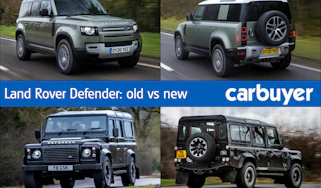
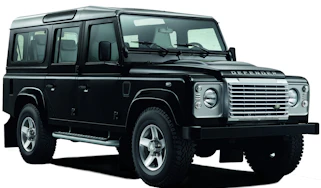
The latest Land Rover Defender is an off-roader that had very big boots to fill when it launched in 2020, because it followed the original classic utilitarian Defender that had existed for decades before it and became a beloved legend.
Fortunately, while the latest Defender isn’t quite as spartan and no-nonsense as its forebear, it’s still built to be extremely off-road capable and yet still usable everyday. Some purists might still be put off by its modern reimagination – so much so that the latest Defender has a rival by the name of the Ineos Grenadier, which was designed to stick to a more traditional 4x4 recipe.
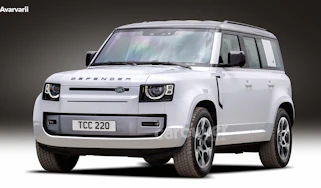
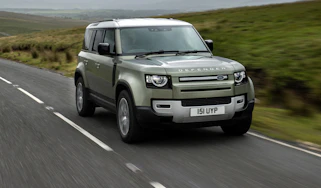
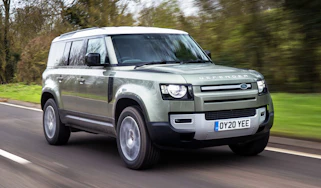
Happily, though, Land Rover resisted the temptation to lean too far into the Defender’s retro charm – it’s got a clean design that looks modern and attractive, and yet isn’t too fussy. However, its advanced technology, improved performance, luxury and safety kit mean the Defender has been parachuted into the 21st Century.
 Top 10 best 4x4s and off-roaders 2025
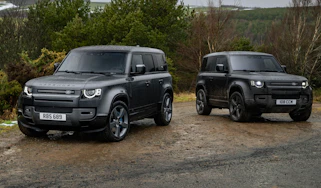
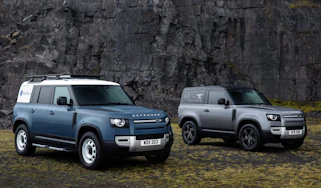
We'll let you decide whether its design is a success, but it certainly looks appropriately chunky, and details like its front and rear lights are impressively intricate. There are plenty of personalisation options too. It may be that you love the basic Defender with steel wheels, but hate the range-topper with gargantuan gloss black alloys, or vice versa. Similarly you may prefer the looks of the three-door Defender 90 to the longer five-door 110; there’s also an even lengthier 130 model to choose from, too.
More reviews
In-depth reviews
Inside, the Defender has a rugged, industrial aesthetic, characterised by exposed bolt heads, metal surfaces and an exposed magnesium crossmember that forms part of the car’s structure. The Defender 110 and 130 are available with up to seven and eight seats respectively.
Passengers are treated to the latest in-car entertainment and connectivity, with Land Rover's Pivi Pro system using two modems to ensure it can be wirelessly updated, even while being used for media, navigation or traffic updates.
The entry-level engine is a 3.0-litre V6 diesel, badged the D250 with mild-hybrid assistance for improved efficiency. Above this is the D350 with increased power. On some higher-spec models you can get the 5.0-litre supercharged V8 petrol P425 with 419bhp, P500 with 493bhp or the P525 with 518bhp. If that’s not enough, the hottest ‘Octa’ variant gets a whopping 616bhp from a 4.4-litre turbocharged V8. It’s safe to say that there’s plenty of choice when going for a modern Land Rover Defender. There’s even a plug-in hybrid P400e or P400e for added versatility and lower running costs, though this is unavailable to configure on Land Rover’s website at the time of writing.
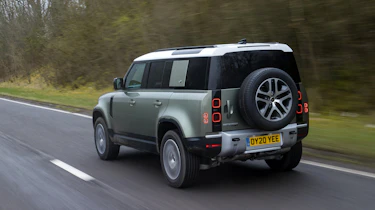
No matter which powertrain you choose, all versions of the Defender come with an eight-speed automatic transmission, low-range gears and four-wheel-drive.
All of the Defender’s powertrains offer plenty of punch, but it's the way the Land Rover feels to drive that's most surprising. The steering is direct and responsive, tucking the nose into corners with little hesitation and while there's some body roll, this suits the Defender's character. This is a Defender that's surprisingly sporty and enjoyable to drive along a twisty road, thanks to the chameleon-like nature of its adaptive air suspension.
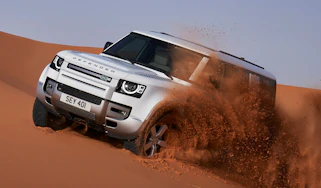
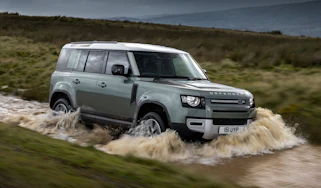
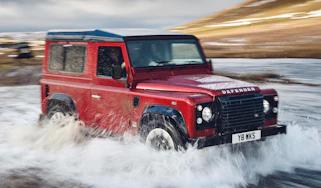
Off-road, the same setup can extend, providing enough articulation to see the Defender crawl over almost any obstacle and wade through almost a metre of water. It's almost unstoppable off-road, and incredibly comfortable while tackling the very roughest terrain. It can also tow up to 3,500kg and carry an unbelievable 300kg on its roof.
The Defender has always been innovative and the latest version is one of the most intelligent cars we've ever tested. It may be rather uneconomical – unless you choose the plug-in hybrid and charge it up regularly – but it makes up for this with impressive on and off-road manners, and an incredibly well-considered design for demanding buyers, their passengers and all their gear.
There are few SUVs on sale today that can match the Defender’s broad spectrum of skills. Those looking for a rugged 4x4 may also want to consider the Toyota Land Cruiser or Ineos Grenadier, but neither are as refined or rewarding to drive on-road as the Land Rover. At the other end of the spectrum, there are plenty of luxury SUV alternatives such as the BMW X5 or the Audi Q7, both of which offer a more upmarket cabin. However, many of these premium SUVs are designed primarily for road use and will struggle to match the Defender’s all-terrain talents.